
The Channel Selection Process
In the previous chapters, we have discussed the “who” and “what” of digital communication effectiveness. The “who” refers to the market audiences that you will target during your campaign as the “what” refers to what you will say to those target audiences. This chapter specifically discusses the “where” which speaks to the communication channels that you will select to use as your preferred communication methods. To begin, inbound marketing requires that you have three main categories of channels through which you communicate. They include:
- An Awareness Channel: This is where you post all of your created and curated content that serves as your momentum for building content leadership. It IS your website and the blogging function on the site.
- Acquisition Channels: These are where you will post snippets of your content with a featured image and content hook. They are your social media sites from where you will entice readers to click on a hyperlink that will take them back into your website/blog.
- Retention Channels: These are where you will create emails and reminders for your loyal readers/consumers to create another hyperlinked process for them to return to your website on a regular basis. This is primarily your email channel but can come in other forms like MeetUp, Slack, or other reminder applications that encourage reciprocation.
For an inbound marketing campaign to be successful, you need all three types of these channels working fluidly and succinctly. For example, without the first channel, content is not being produced. As we have said repetitively, content starts this whole process. If you aren’t producing content, then none of the other channels will function at all. Next, you must have acquisition channels to be able to bring users to your website. You have to be properly posting timely information in your social channels to be able to get consumers’ attention. Lastly, you must have an email campaign going at a minimum of once every two weeks, but once a week is better (and required for your practicum). These channels are critical to keep your most loyal audience engaged. These are the consumers that over time become advocates for your brand and share word-of-mouth marketing for free. You must engage these consumers with good quality content that is prepared just for them. You need to reward them with expert content that they can’t get anywhere else but through your retention channels.
The Digital Engine Model of Inbound Marketing
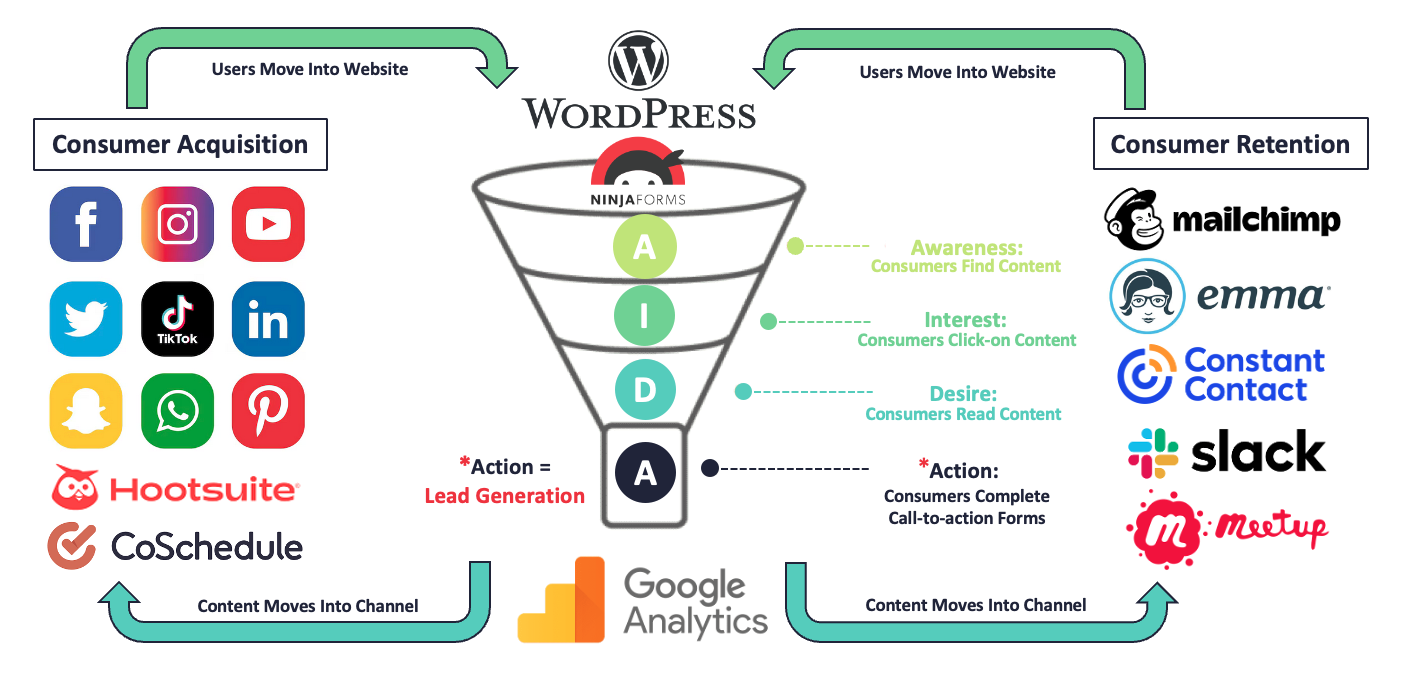
Therefore, as you can see from the AIDA communications model above, the created and curated content flows from the WordPress website (center) out to both sides of the graphic. This suggests that after you create and post the content to your website’s blog, then you will reformat that content into the correct style for re-posting snippets and hooks into both the consumer acquisition side of the model (your social media channels) and the consumer retention side of the model (your email and reciprocation channels). This content should enter into the awareness of the consumers at your selected social media channels where it should pique their interest. If it does, then the consumer will desire to read the rest of the content and click on the hyperlink in the post or email. Once the consumer has clicked the link and has been directed back into your website’s content, then every post should have some sort of call-to-action where the consumer can take action on your request.
Meanwhile, if set up correctly, Google Analytics will track all of the users on your website, where they come from, how they flowed through your website, how long they spent on each page, and whether or not they completed the call-to-action forms. You must understand this AIDA model before you start selecting which communication channels that you want active for your campaign. The rest of this chapter will discuss the history of these three categories of channels (Leadership, Acquisition, and Retention Channels), while future chapters will teach you how to tactically use them as effectively and efficiently as possible.