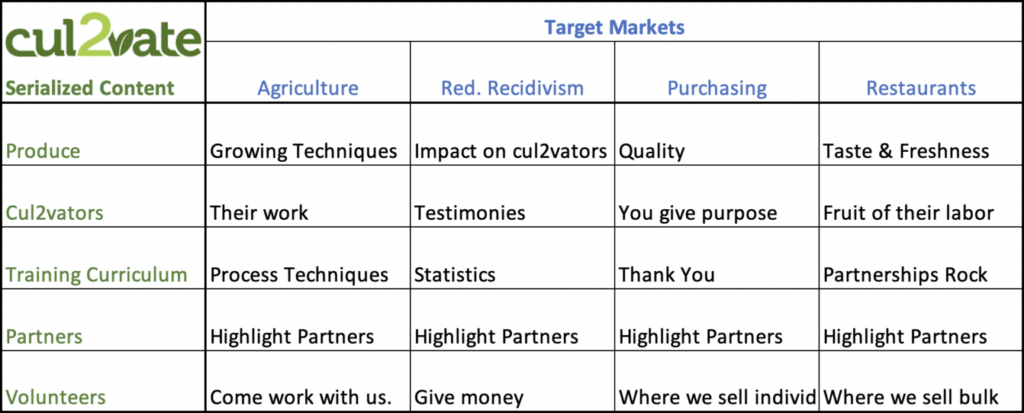
The Content Matrix

As we have indicated previously in this text, and will continue to reinforce, the strategic marketing principles for inbound marketing campaigns do not change just because the medium has changed. The historical principles of marketing still apply in a digital environment, it is just that the context that changes. We still use the proven marketing principles but now within a new medium; therefore, we must implement them within the parameters of this digital medium. In Chapter 2, there was an ample amount of text devoted to the development of key brand elements for a firm or organization. In building the brand pillars, a brand narrative was created that will serve as the balancing force for keeping future messages centered and “on brand” in the digital environment. In Chapter 3, the next process was determining to whom and how those online digital messages will be delivered. We still have to discover the market segments, choose one or more target segments, and deliver serialized messages that resonate with customers and differentiates our firm from the competition. To assist with this process, we introduce to you the Content Matrix, which is a strategic planning tool that will combine the chosen target market segments with the serialized content areas to create a strategic tool that will help you strategize for this Who x What interaction.
To highlight this process, we will continue to use the non-profit Cul2vate from the previous chapter. In Chapter 3, the potential target markets for Cul2vate where identified, they included groups of individuals that were interested in these topics: agriculture, reducing recidivism, individuals purchasing produce, and restaurants who use the organic produce as ingredients. For short, we will label these four groups as agriculture, recidivism, purchasing, and restaurants. These targeted groups of consumers will be put across the top of each column of our matrix (demonstrated in blue column labels in the content matrix below). Along the side of the matrix, for each row, we will include the serialized content areas (green row labels) where we will serialize content that will delivered to each of the targeted groups of individuals. This serialized content for Cul2vate revolves around messages they want to communicate to their target audiences, like information about the produce they grow, messages about their cul2vators (ex-convicts working on the farm), special notes about their training curriculum, identifying their strategic partners, and messages to and for recruiting new volunteers.
These cells of interaction between the targeted group and the targeted message (e.g. “Growing Techniques”) will serve as a focused dedicated message that Cul2vate can serialize across their media channels on a continual basis as part of a rolling calendar of editorial content. We will discuss this calendar more in the next chapter, but for now, the matrix below gives you a great visual for what the message matrix should strategically look like when formulated correctly. Your next assignments will assist you in creating a message matrix and editorial calendar of your own for your upcoming live practicum.
Cul2vate’s Content Matrix