
Creating Your Editorial Calendar from the Content Matrix
In the previous chapters, we discussed the process for creating the content matrix. This was the interaction of our defined target market segments with our serialized group of messages across our various social media channels. Recall that our textbook example, Cul2vate, had four target audiences, five serialized groups of messages, and four social media channels. This creates a market x topic x channel interaction of eighty unique marketing messages (4 x 5 x 4 = 80) that Cul2vate now has the opportunity to communicate on a regular basis. The content matrix strategy has given Cul2vate a rolling supply of content in the form of serializable messages. This allows Cul2vate to stay on brand with their messaging, but also consistently gives them something to talk about. No longer does a content creator at Cul2vate sit down and consider, “what should I write about today?”
 The content matrix provides the exact branded content that the content writer needs. The next step of this strategic process is to put the content matrix content into a rolling calendar, so that he or she will also know not only what to write, but when to publish it. In other words, a rolling calendar will allow the content to already be planned out weeks in advance. Some companies use a 45-day, 60-day, or 90-day rolling calendar, depending on the rate of change in the industry. If an industry is changing very fast, then a 45-day calendar may be the most aggressive plan of action for a company in this type of industry. Whereas, if the rate of change is slow, a company may be able to plan its content at least three months in advance with the 90-day calendar. Let’s use Cul2vate as an example for how to schedule a 45-day rolling editorial calendar.
First, using the example demonstrated below, one can see that in the beginning stages of building an editorial calendar, the process starts with the content matrix components and a description of what type of campaign is being highlighted during any given week. If it is a branding campaign, then the messaging should consistently be structured around building the perception of the brand. Here in this case, everything that is posted to the website through the blog or within the social media channels, should increase the awareness and perception of the brand “Cul2vate.”
If it were a promotional campaign, then there is something specific that Cul2vate wants to highlight and promote through their marketing channels. As seen above, during the first week of April, Cul2vate wants to focus on carrots. Since it is Easter, which is traditionally associated with rabbits in the United States, Cul2vate has decided to promote their greenhouse carrots. Also, as a religious based non-profit, they also want to offset the secularism of rabbits at Easter with something more spiritual in nature, like taking care of the less-fortunate. Therefore, they are also going to blog and highlight a donation campaign that they will be running in may where they donate boxes of home-grown produce to the local community. Note, in the top category of information, they make sure to plan for any holiday focused material that they would like to potentially incorporate into their marketing messages for appeal, like with a post on “Lucky Leafy Greens” around St. Patrick’s Day, or as aforementioned, “Rabbits Out of the Garden” around Easter.
Next, Cul2vate has decided to blog twice a week. For consistency’s sake, they will post these blogs at the exact time each week on Tuesday and Friday at 11am. These blogs will include an in-depth message targeted towards one of their four target market segments (Agricultural Enthusiasts, Reducing Recidivism Proponents, Individual Consumers, or Restaurant Buyers). As you can see, their primary blog readers are people interested in agriculture, which they listed first. Therefore, there is a strong weekly focus towards that particular market segment with almost one blog per week. The other weekly blog either highlights one of their “Cul2vators” that currently is working on the farm and staying out of jail, or one of the opportunities they have to sell produce either directly to consumers or restaurant partners. These blogs will be the foundation for the social media posts for the entire week, which again keeps the marketing messages focused and on brand.
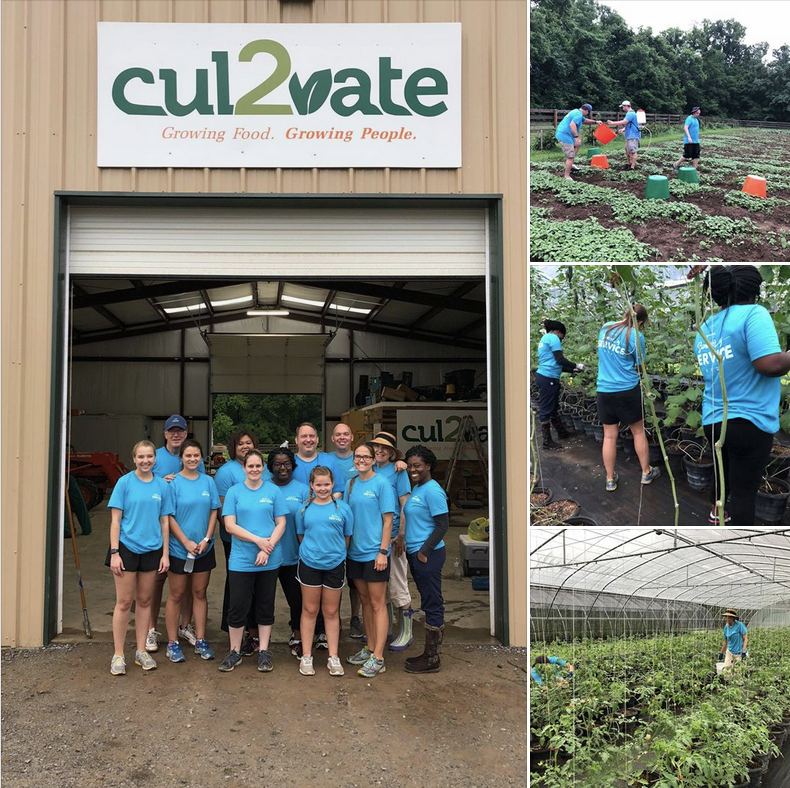 As another example, Cul2vate also wants to focus on two major events that are happening this week. One is a local volunteer group, FCC, that is coming to help Cul2vate prepare for the last week of winter. The second major event is a delivery of greenhouse vegetables delivering to a local restaurant named BurgerBarrick. Blogs will feature these two events, while the social media channels highlight the people and their work that will make these events successful. The calendar also demonstrates that they are also praising Phil and Tom’s work in the greenhouse, Bill for making the delivery, and the FCC volunteers for helping make it all happen. They even negotiated a deal with the BurgerBarrick to feed the volunteers after a long, arduous morning of work before the delivery. Knowing these events were going to happen a few weeks in advance, they built the plan into their editorial calendar and made sure to have pictures, videos, and testimonials coordinated in order to have content for that week.
Finally, the editorial calendar helps prepare this type of content on a rolling basis, that is, as the entire 6-week (or 45-day calendar) was planned in the weeks and month prior, then Cul2vate strategically thinks about 45 to 60, even 90 days in advance. By that time, they can continue creating more events associated with volunteers and delivery, or they may choose to incorporate a different plan. The reality is, that if a company were to find a good rhythm of content, then they can continually roll that quarterly content so that there is never a question about what content is available to post. Assuming that the rolling calendar is already planned a quarter in advance, then there is always a content structure available for the next quarter. In this case, the rolling part of the calendar is a template for every subsequent quarter. It just requires contextualizing the content around the actual volunteers, restaurants, cul2vators, etc. who will be participating during that quarter.