
STP in a Digital Context
Segmentation, targeting, and positioning is relevant to digital marketing too, especially at tactical communication levels. For example, applying marketing personas can help develop more relevant digital communications, which we will discuss in future chapters. But to bring home STP’s relevance in a digital context, we turn to Dave Chaffey of Smart Insights in his book Digital Marketing: Strategy, Implementation, and Practice[1]. His work shows us how Segmentation, Targeting and Positioning (STP) apply to digital marketing strategy.
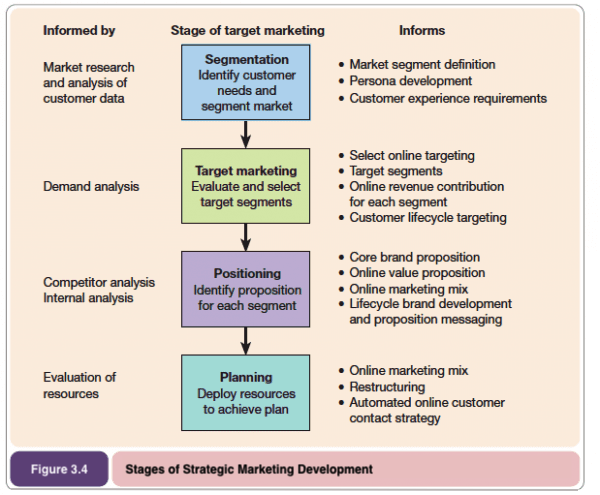
The figure to the right informs us of how STP is used to assist in digital marketing. First, segmentation is informed by market research and analysis of your current web visitors (through Google Analytics) which will inform you on how to define your market segment, develop a persona of your typical consumers, and will assist you in developing your customer service guidelines detailed in your brand promises. Secondly, target market selection is informed by analyzing your current web traffic on specific web landing pages on your website and traffic to your social media channels. On these specific pages and platforms, you can begin to develop content specifically for your targeted segments, determine which groups are engaging the most with both content and product sales to focus more heavily in content development in those areas.
Next, you will position the product in your digital marketing channels parallel with your brand development strategies from our previous branding chapter. This will help you develop your value proposition and determine the correct online marketing mix for your brand or product. Lastly, the STP process flows into your final planning and implementation stages, where you have evaluated your available resources and as efficiently and effectively as possible, put them to work for achieving the strategic plan. This could include to grow the brand, sell more units, increase customer satisfaction, increase market share, or in some unfortunate cases, correct bad service experiences or ill-fated occurrence on social media. The key is that strategic plans are constantly being evaluation and re-shaped as time reveals positive and negative confirmation of your strategic initiatives.
This information reminds us how digital channels offer new options for targeting audiences that weren’t available previously. We will study many more of these tactics in the following levels, but for now, new options in digital channels can include:
- Blogging: Creating or Curating content with your level of expertise to create content leadership perceptions.
- Social Media Posts w/ Targeting Tools: Using Facebook or other social media targeting tools to prospect for those interested in your content area, like Gardening, Gym Memberships, or Golf.
- Email Targeting: Using email personalization and on-site personalization based on profile, behavior (e.g. content consumed) to retain consumers and keep them coming back to your site over and over again.
- SEO Keyword Searches: Identifying the most often used keywords when comparing products consumers are interested in purchasing or researching on the Internet and then using those keywords in blogs, social media posts, and emails.
The rest of this platform text will be used to help you with strategies around all of these areas as you put The Digital Engine to work for you this semester in your online practicum. But before we get into those chapters, we challenge you to go back and re-examine your brand positioning statement and brand tagline. When considering who your target markets will be, is there anything that you need to alter or expound upon in your positioning? This is very important, so please take the time to review and provide more thought around your brand positioning for your upcoming practicum.
References:
[1] Chaffey, Doug. (2021). Digital Marketing: Strategy, Implementation, and Practice. https://www.smartinsights.com/digital-marketing-strategy/customer-segmentation-targeting/segmentation-targeting-and-positioning/